Inside Ketubah Studio
How a painting becomes a Ketubah Studio asset
Follow one little Cockapoo from Sophie’s drawing board into the online design tool, and see how hand-painted artwork becomes part of a personal ketubah.
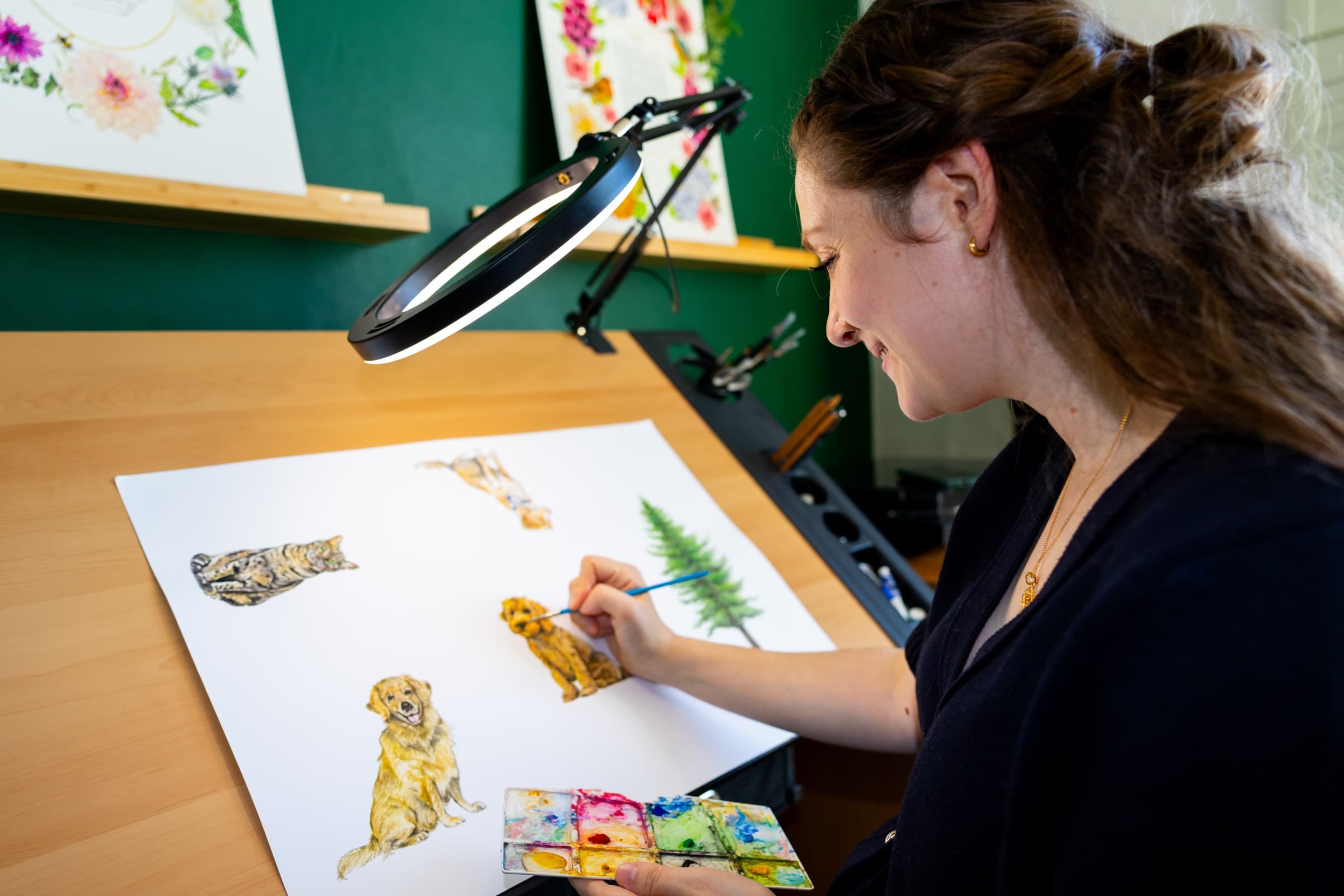
Ketubah Studio may be a digital design tool, but its building blocks begin with paper, paint and careful brushwork. The flowers, birds, animals, fruit and foliage in its library are original artworks painted by Sophie in her Manchester studio.
The Cockapoo in these photographs is a useful way to see the whole process. It starts as an individual painting, becomes a carefully prepared transparent image, and then appears in the Studio as an element that a couple can position within a much larger composition. The technology makes the artwork flexible without taking away the character of the original brushwork.
Every Studio asset begins as a painting
Sophie paints the elements individually rather than designing them as pieces of software. The Cockapoo is painted on paper alongside other animals and natural details, with the same attention to expression, colour and texture that she gives to a complete ketubah.
Working this way means the assets do not feel like generic clip art. The slightly varied edges, layered colour and fine drawn details all come from the physical artwork. Each element also has to work beyond the page on which it was painted: it must remain recognisable when made smaller, sit comfortably beside flowers or geometric borders, and still reward a closer look in print.
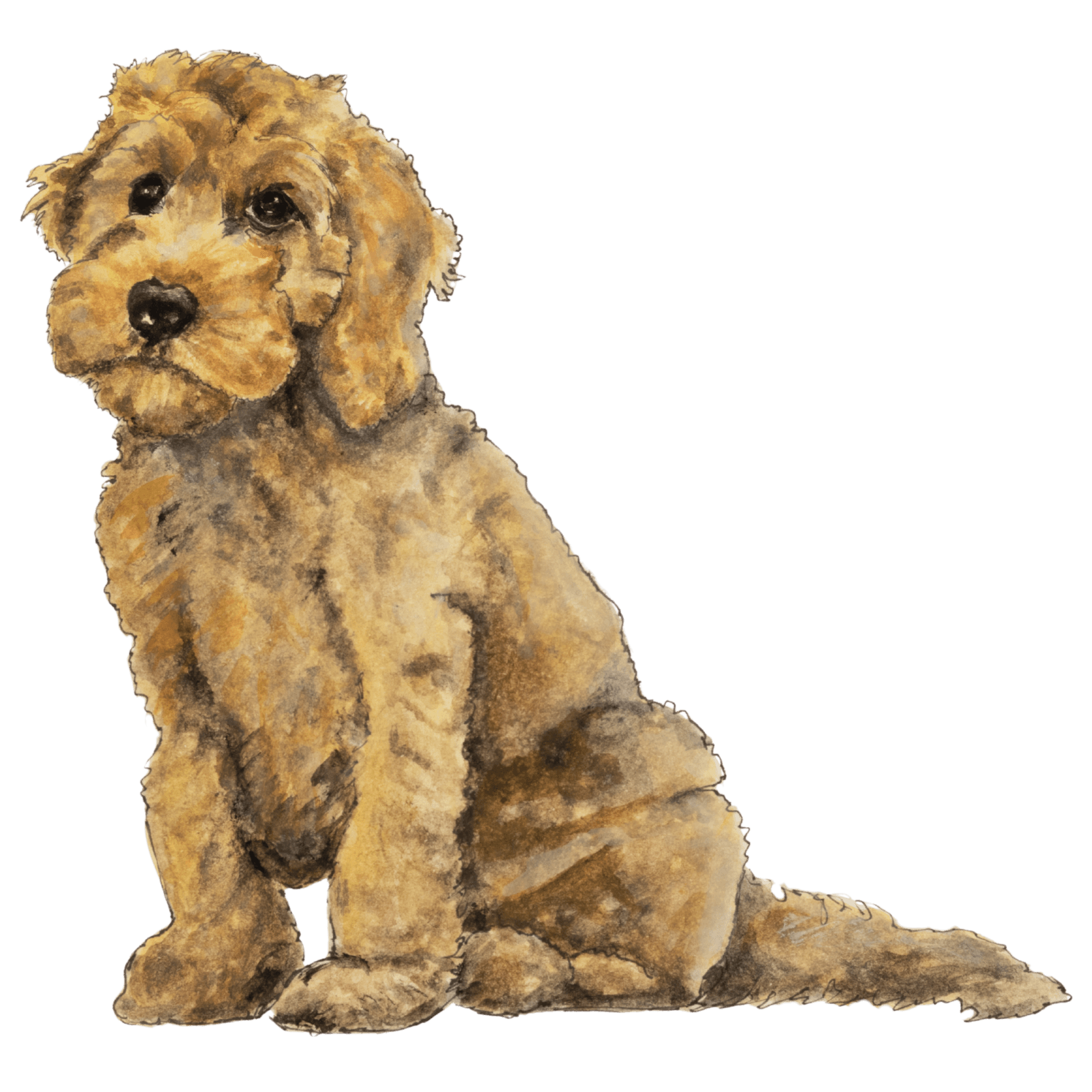
The Cockapoo is separated from the paper
Once the painting is finished, the artwork is digitised and prepared as an individual asset. The surrounding paper is removed, the edges are cleaned carefully and the transparent space around the Cockapoo is preserved. This allows it to overlap a flower, sit inside a border or stand alone without carrying a white rectangle with it.
The aim is not to make the painting look mechanically perfect. It is to preserve the watercolour texture and hand-drawn detail while giving the element a clean, dependable outline that behaves well in the design tool and in the final artwork.
Preparing each painting for the Studio
The finished painting is prepared so it feels quick and natural to use while you design, without losing the detail Sophie created on paper. You can move the Cockapoo around the canvas, try different sizes and layer it with flowers or foliage without the editor becoming slow or cumbersome.
Behind the scenes, Ketubah Studio keeps a more detailed version of the same artwork ready for the finished design. Both versions are framed and positioned in exactly the same way, so the composition you create on screen carries through accurately when your high-resolution artwork is produced.
The artwork becomes something you can arrange
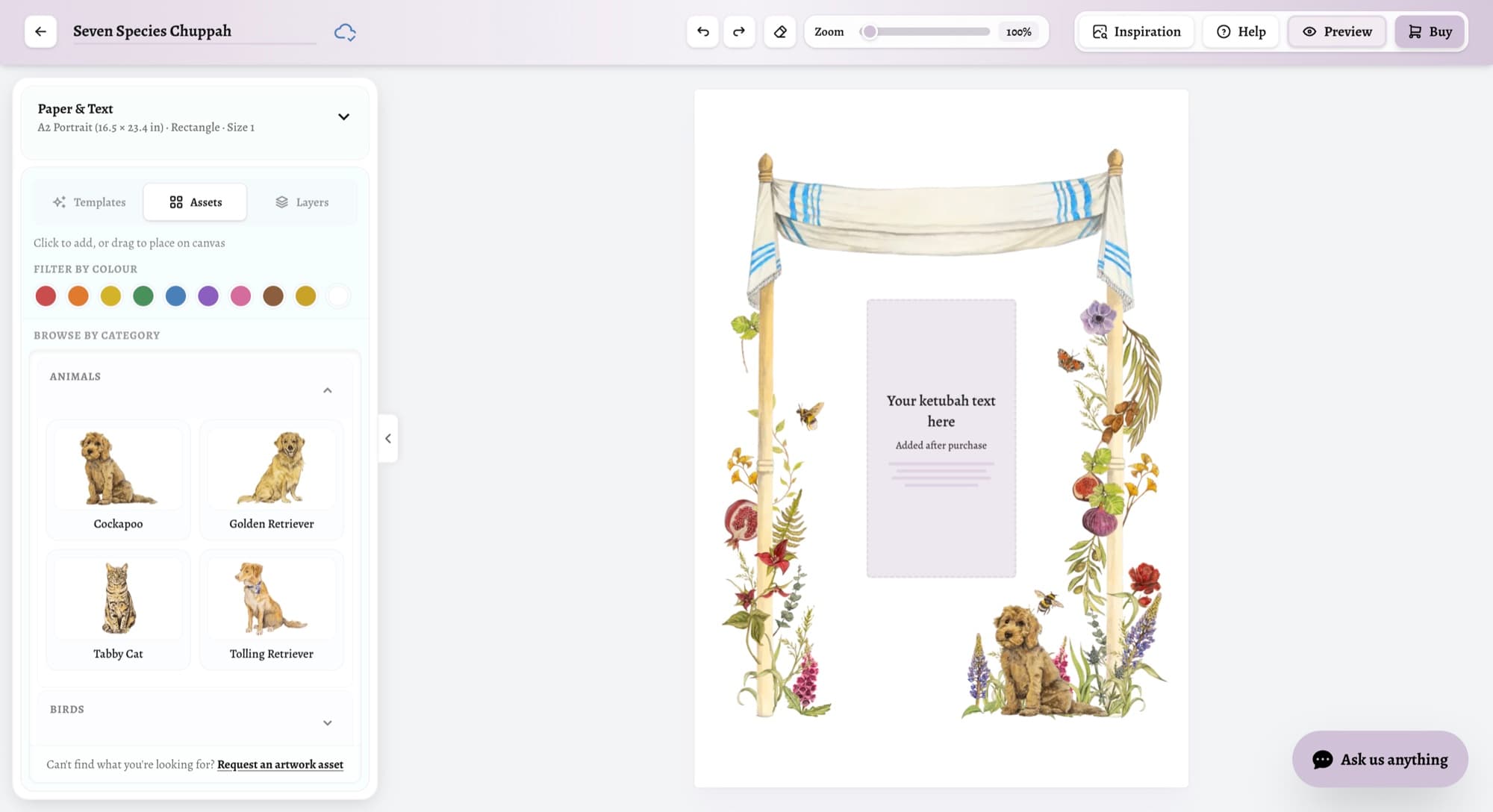
Inside Ketubah Studio, the Cockapoo joins a library of hand-painted flowers, foliage, birds, insects, fruit, animals, borders and landscapes. You choose a paper shape, add the elements that mean something to you, and build the composition around the central text area.
Each element can be moved, resized, rotated, flipped, layered and cropped. You can also make considered colour and tonal adjustments so pieces from different parts of the collection sit naturally together. The tool supplies the ingredients and practical controls; the balance, rhythm and story of the finished ketubah come from the choices you make.
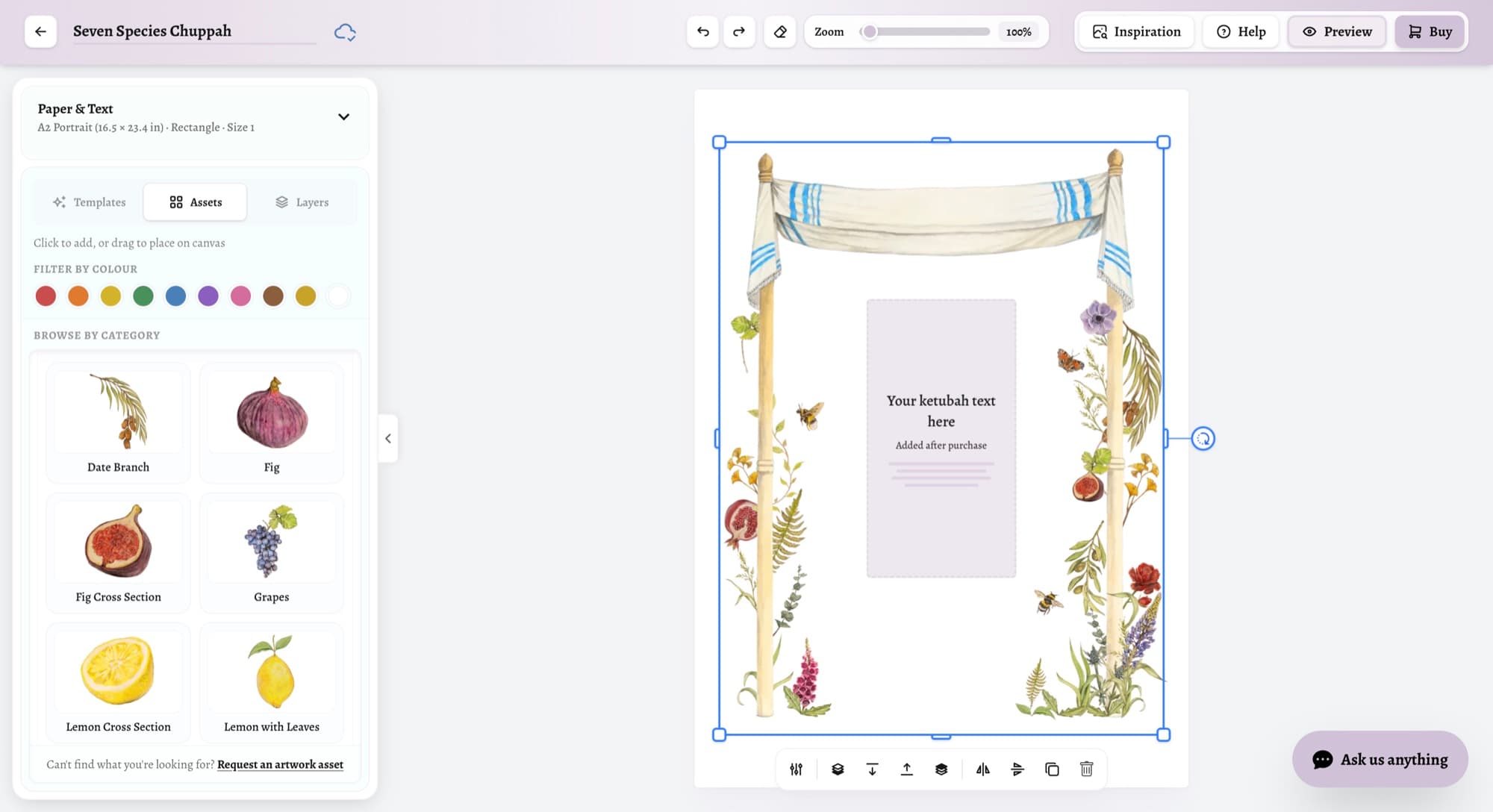
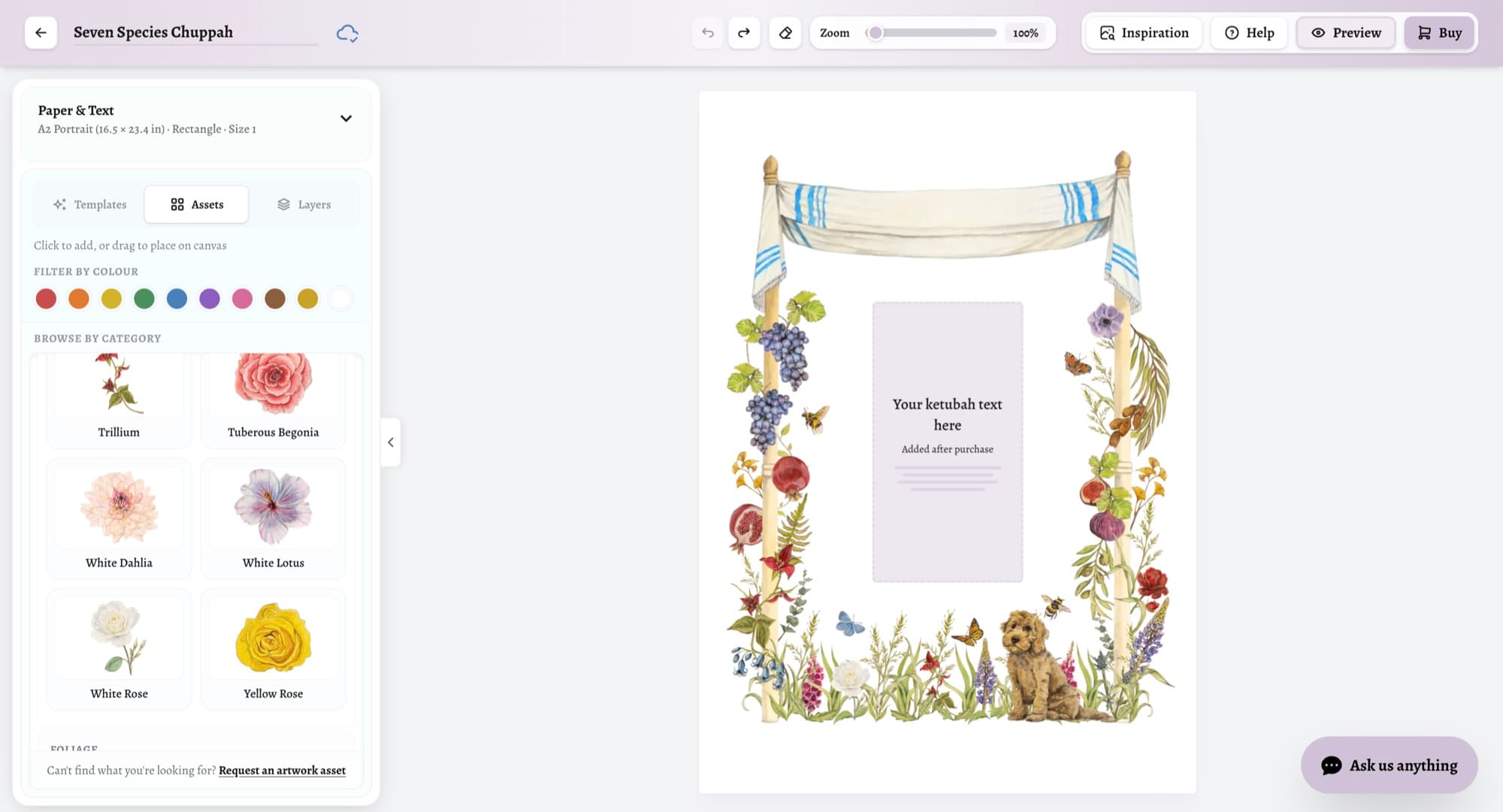
The sequence below shows the Seven Species chuppah taking shape inside the editor. The chuppah and first botanical details establish the structure. More flowers are layered along the base and the Cockapoo finds its place in the meadow. Finally, grapes and additional foliage bring weight and balance to the two sides.
Your arrangement becomes a high-resolution design
While you work, the Studio records the position, size, angle, layer order and other choices for every object. When a finished design is produced, those instructions are applied to the print-quality asset files rather than the lightweight previews. That is how a small Cockapoo moved around on screen can retain its painted detail in a much larger final composition.
You can design for free until you are happy. At purchase, you can choose a professionally finished ketubah, with the approved text arranged and the artwork printed on premium paper, or a high-resolution digital artwork file to complete and print with your own designer or printer.
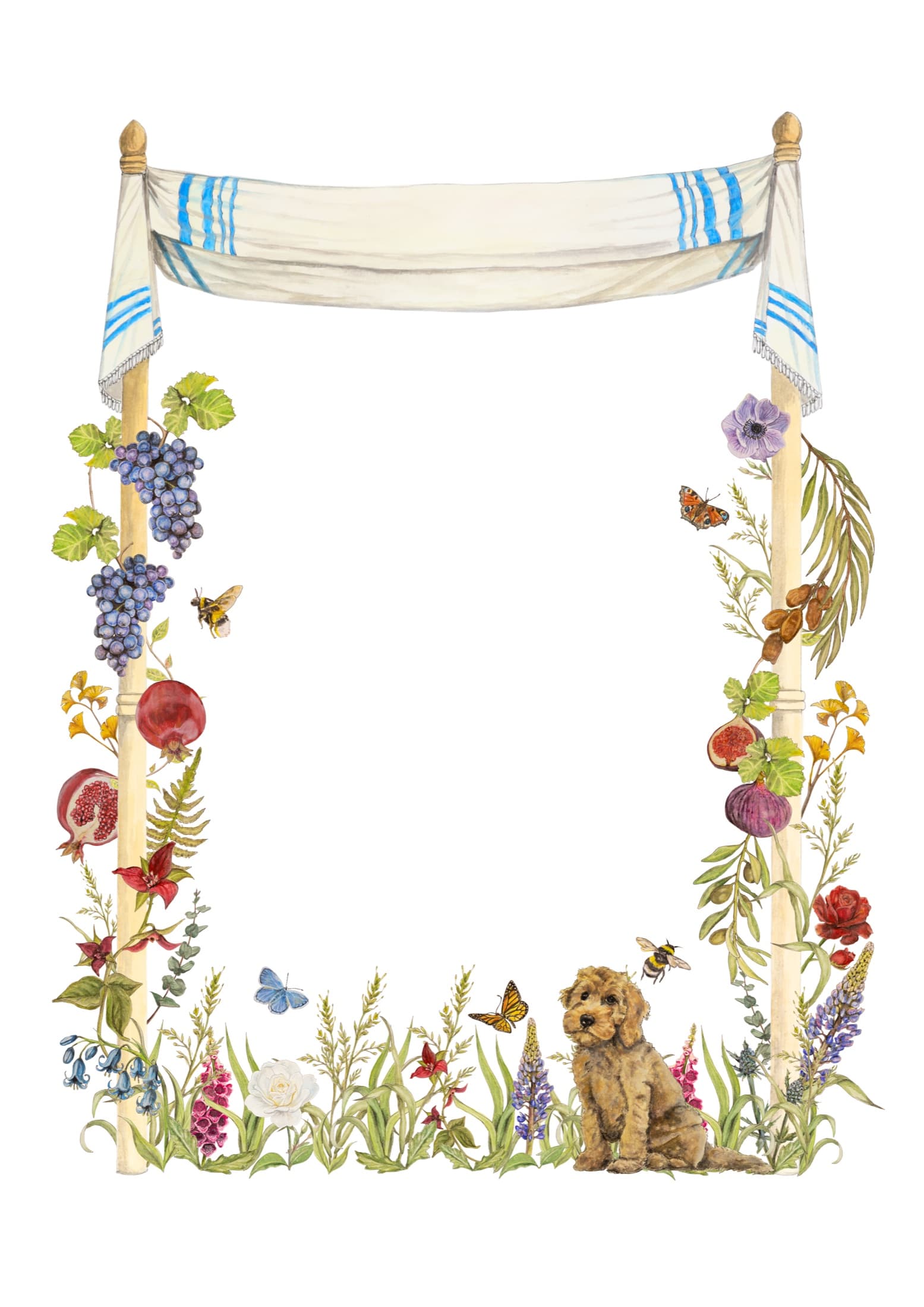
The Seven Species chuppah design below brings that journey together. The Cockapoo sits at the base among lupins, foxgloves, grasses and butterflies, while grapes, dates, figs, pomegranates and olives climb the chuppah posts. One small painting has become part of a balanced portrait composition with room for the couple’s ketubah text at its centre.
Digital flexibility, with an artist still at its heart
Ketubah Studio sits between a ready-made print and a fully custom commission. You are not starting with one fixed composition, but you are also not selecting from anonymous digital graphics. You are arranging a growing library of artwork painted by one artist, with a recognisable visual language running through it.
That combination is what makes the process special. Sophie can continue painting new subjects, from a Cockapoo to a particular flower or bird, while couples can use those individual pieces in combinations she may never have imagined. The finished ketubah is made possible by the tool, but it begins with the marks of a real paintbrush.
If you cannot find a flower, animal, object or symbol that matters to you, you can send Sophie an artwork request. Requests help shape what she paints for the growing Studio library. If an idea is better suited to bespoke artwork, she can explain those options before any work begins.