Inside the studio
How a custom ketubah is made
An honest look inside my commission process, including how your ideas and ketubah text develop together, when the artwork becomes final and what happens before the finished piece reaches you.
A custom ketubah begins long before I put paint on paper. It starts with a conversation about the couple, the life they have built and the things they want their ketubah to hold. At the same time, they are usually working out the wording that feels right for their ceremony, community and traditions.
Those two parts of the process develop alongside one another. We do not have to wait for the final text before discussing the artwork, and we do not have to finish every design decision before the wording is settled. The important turning point comes when both are ready: the couple has confirmed the final text and it is printed, the pencil design is agreed, and I can begin creating the original artwork directly around it.
It begins with a conversation, not a finished brief
Most couples do not arrive with a perfectly formed design in mind, and they do not need to. During the first consultation, I ask about the people, places, plants, traditions and memories that matter to them. We might talk about where they met, landscapes they love, family stories, pets, wedding flowers or the atmosphere they want the finished piece to have.
My role is not simply to place every idea around a border. It is to listen for the connections between them and find a composition that feels coherent. Sometimes one image becomes the heart of the design. In other commissions, a collection of smaller details builds a visual story around the text.
This early conversation is also where we discuss practical points such as the wedding date, the wording the couple expects to use and whether they would like optional gold or silver ink details.
The artwork and ketubah text develop in parallel
While we discuss the artistic direction, the couple also works out the ketubah text that is right for them. Depending on their community, ceremony and traditions, they may do this with a rabbi, cantor, celebrant or another person guiding the wedding, or they may make those decisions themselves. These are parallel conversations rather than two rigid stages. We can be gathering ideas, refining the composition or reviewing a sketch while the wording is still being finalised.
There is no single text or approval route that applies to every Jewish couple. What matters for my process is that the couple confirms that their wording and personal details are final and right for their ceremony before the sheet is printed. I can help arrange the text clearly within the artwork, while the decisions about what it should say remain with the couple and anyone they choose to guide them.
As soon as the final text has been approved, it is ready to print, regardless of how far we have reached with the artistic planning. This keeps both parts moving without rushing either one.
The pencil sketch is the moment to make changes
Once the direction is clear, I draw an initial pencil sketch. This is where the couple can see how the main elements relate to one another and how the artwork will frame the text. They can ask questions, suggest adjustments and tell me if something does not feel right.
I will change and refine the pencil drawing until the couple is happy. This approval matters because the next stage changes the nature of the work. Once I go over the drawing with fine art pen and begin painting, there is no simple way to erase an element or completely restructure the composition.
Small additions may still be possible after painting has begun, and I remain in contact throughout. Removing painted or inked details, however, or making a drastic change is often impossible. The generous revision stage belongs before that point of commitment.
Approved text becomes an original painting
The couple’s confirmed final text is professionally printed on heavyweight 310gsm paper. I then work directly onto that printed sheet, first defining the agreed pencil drawing in fine art pen and then building the colour by hand.
I use watercolour for its transparency and movement, gouache where a richer or more opaque area is needed, and fine art pen for the drawn details. Gold or silver ink can be added as an optional finish. Because the painting is made around the couple’s own printed text, the final ketubah is one original artwork rather than a reproduction with personal details added afterwards.
Throughout the painting I send progress photographs and stay in touch with the couple. They can watch individual areas take shape rather than disappearing from the process until the very end.
Rafi and Vic: a joyful botanical frame
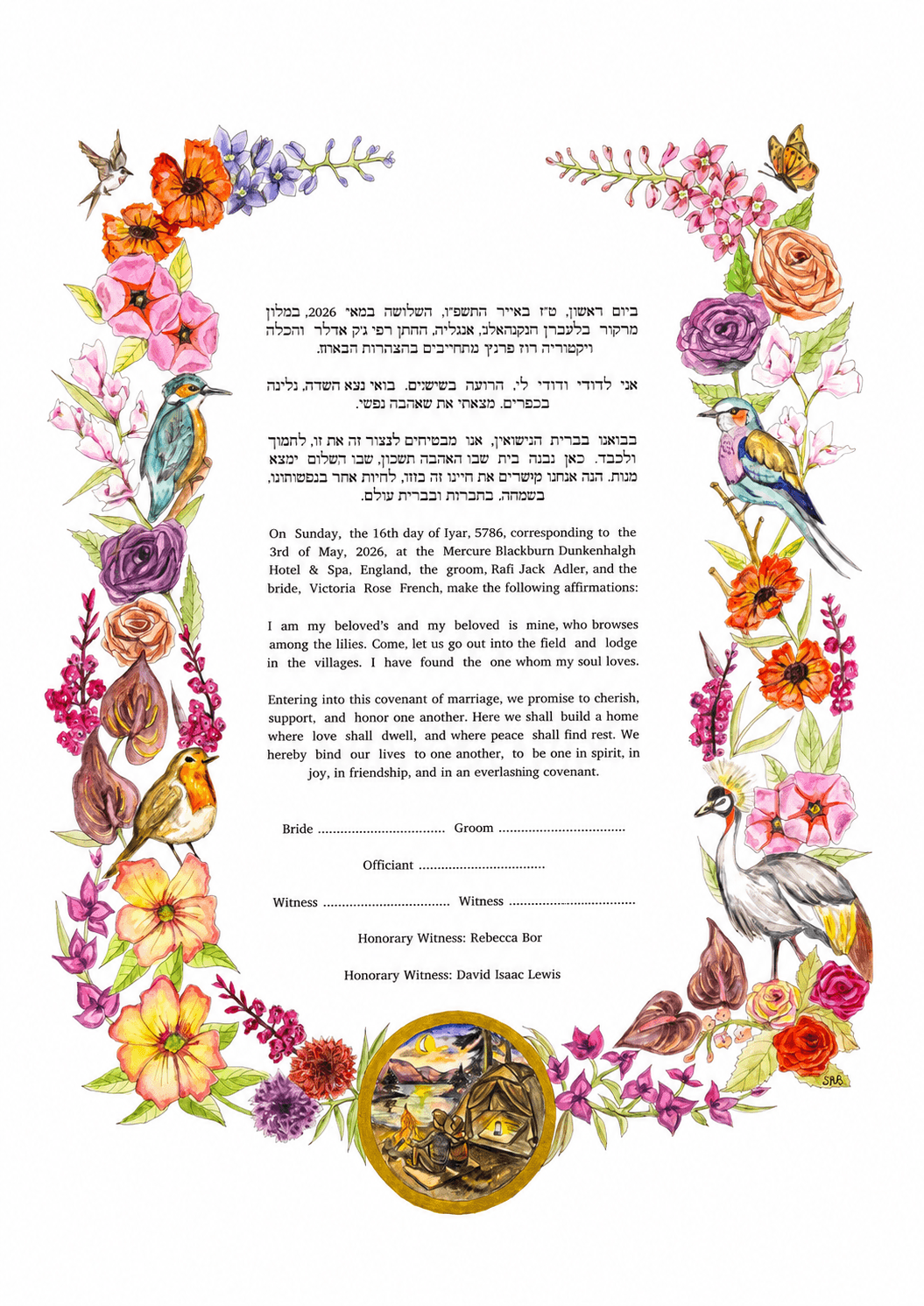
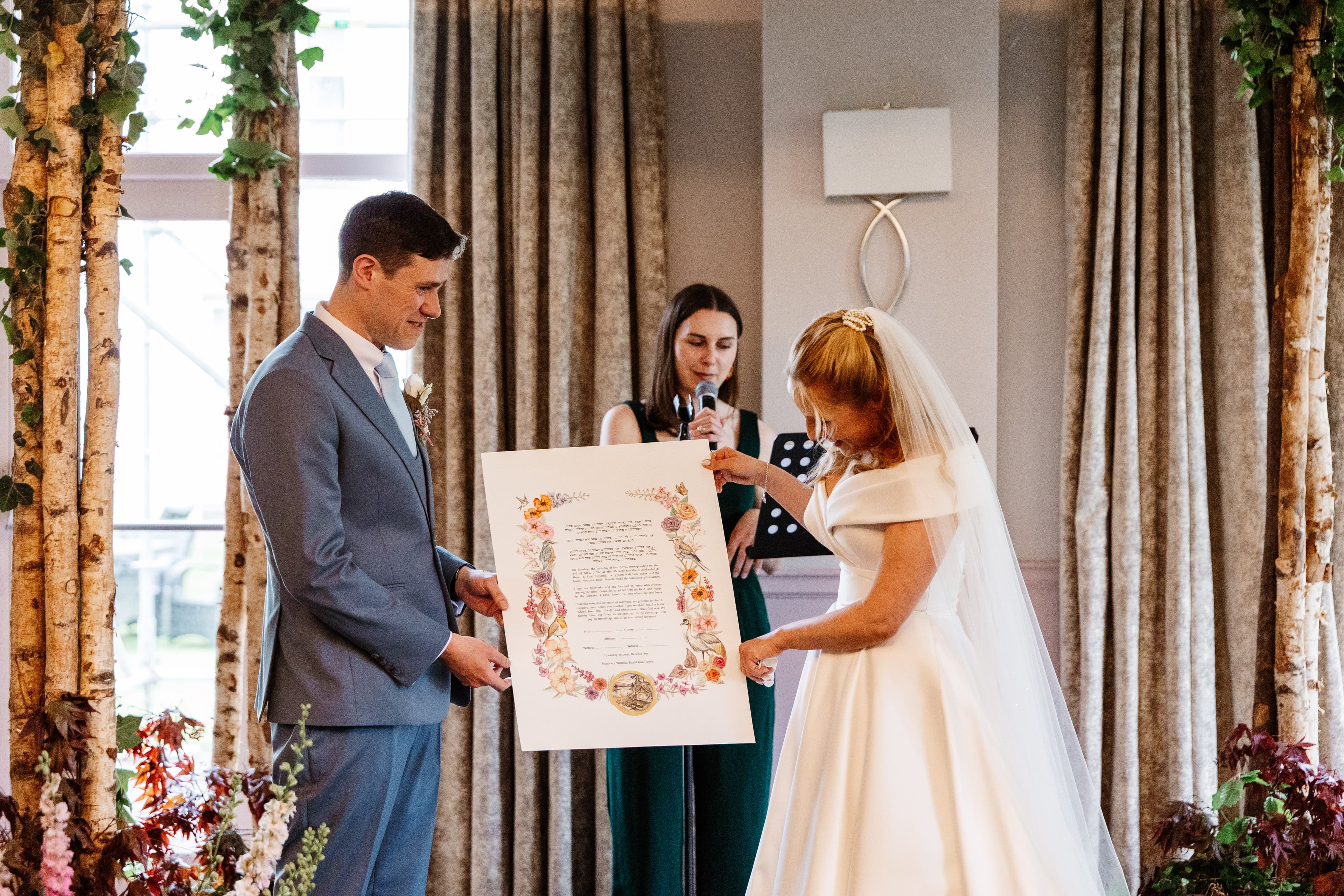
Rafi and Vic’s finished ketubah shows how many individual painted details can form one generous frame without overwhelming the document. Flowers in vivid oranges, pinks and purples move down both sides. The couple love birdwatching, so the birds were chosen for the particular meaning they hold for them rather than added simply as decoration. At the base, a small scene shows the couple camping and preserves another beautiful memory that is especially meaningful to them.
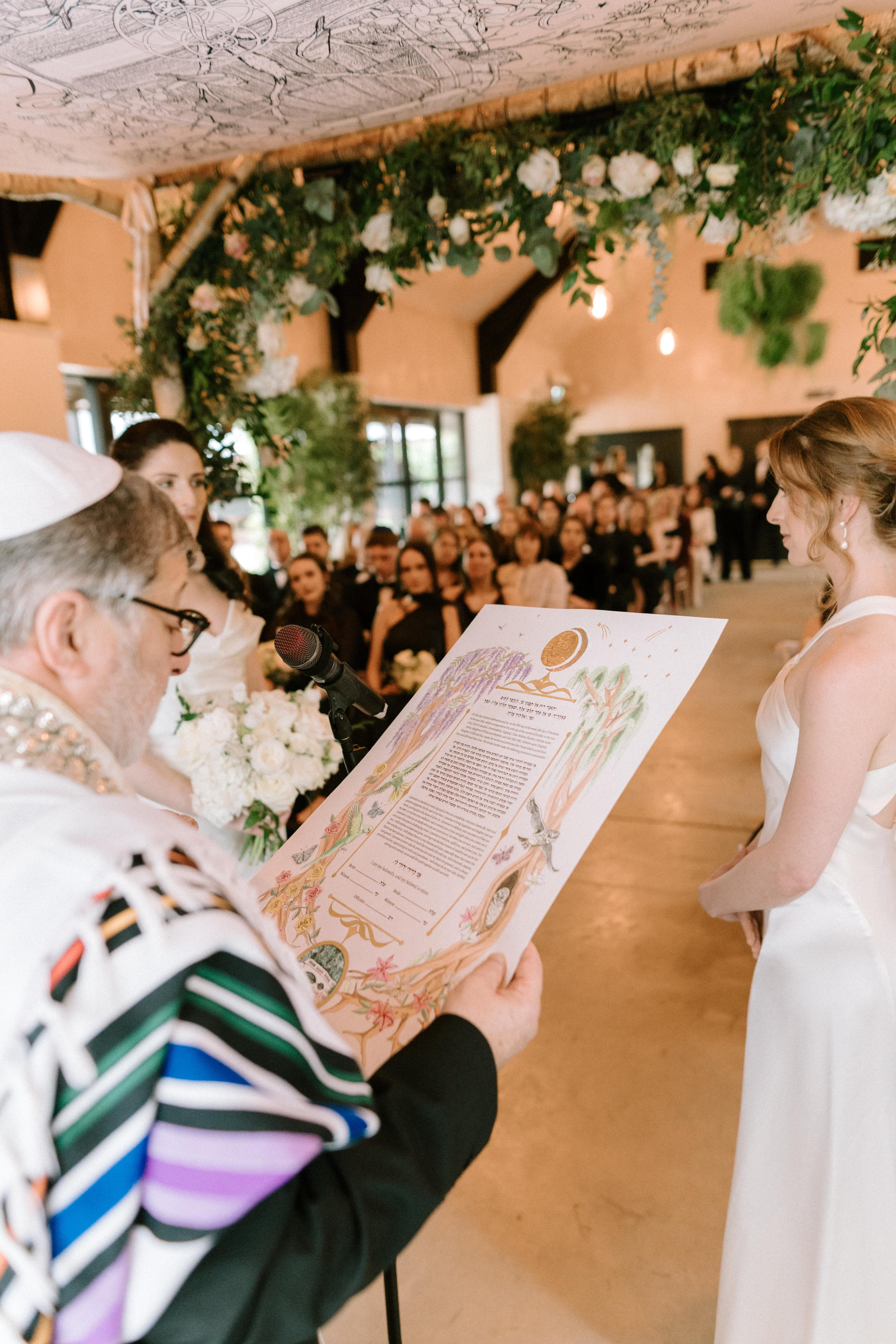
The artwork remains open around the centre, allowing the bilingual text and signature lines to stay clear. At the wedding, the scale and colour gave the ketubah a real presence when it was held up during the ceremony. Seen close up, the smaller natural details reward a second look.
Chloe and Jade: two trees holding one composition
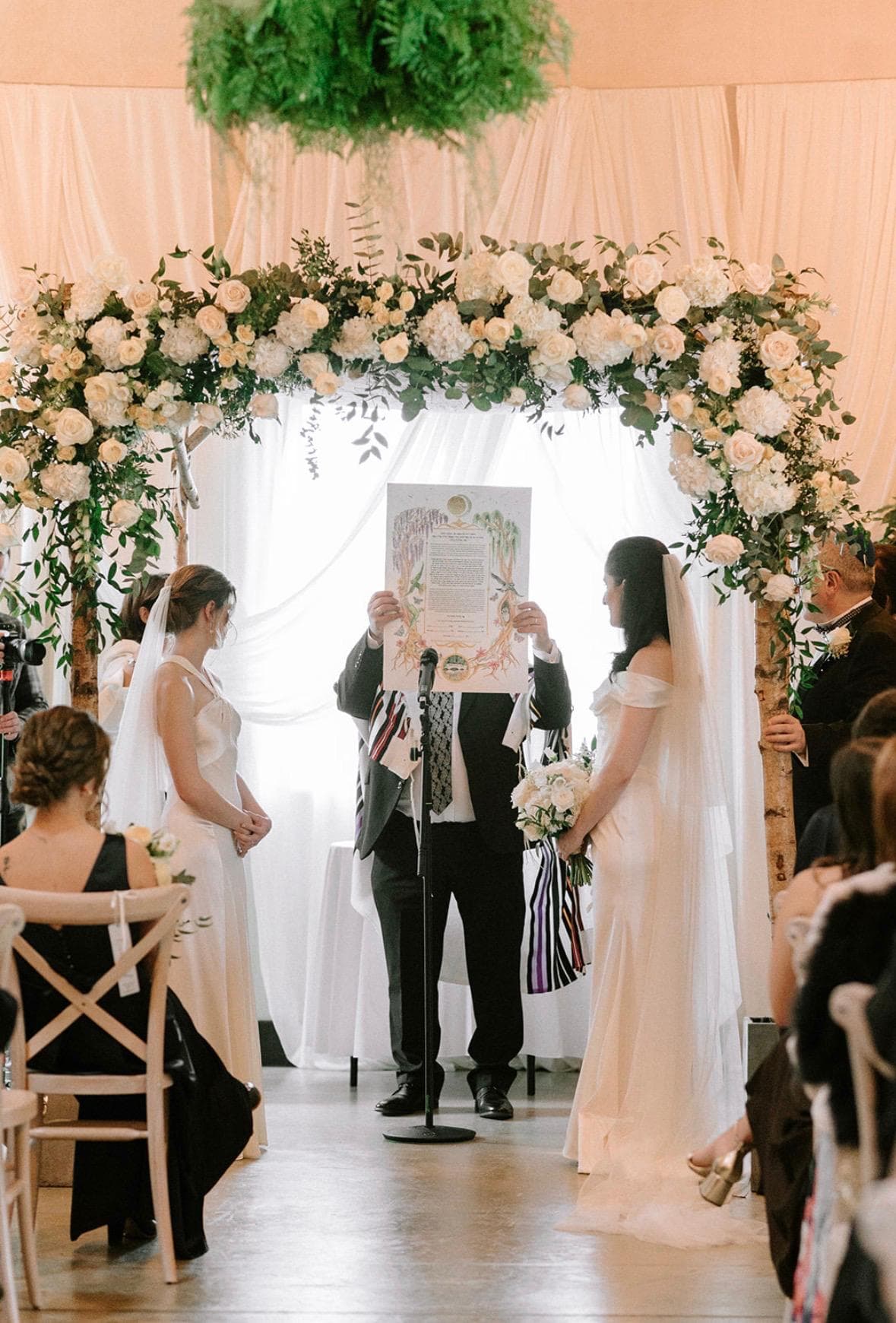
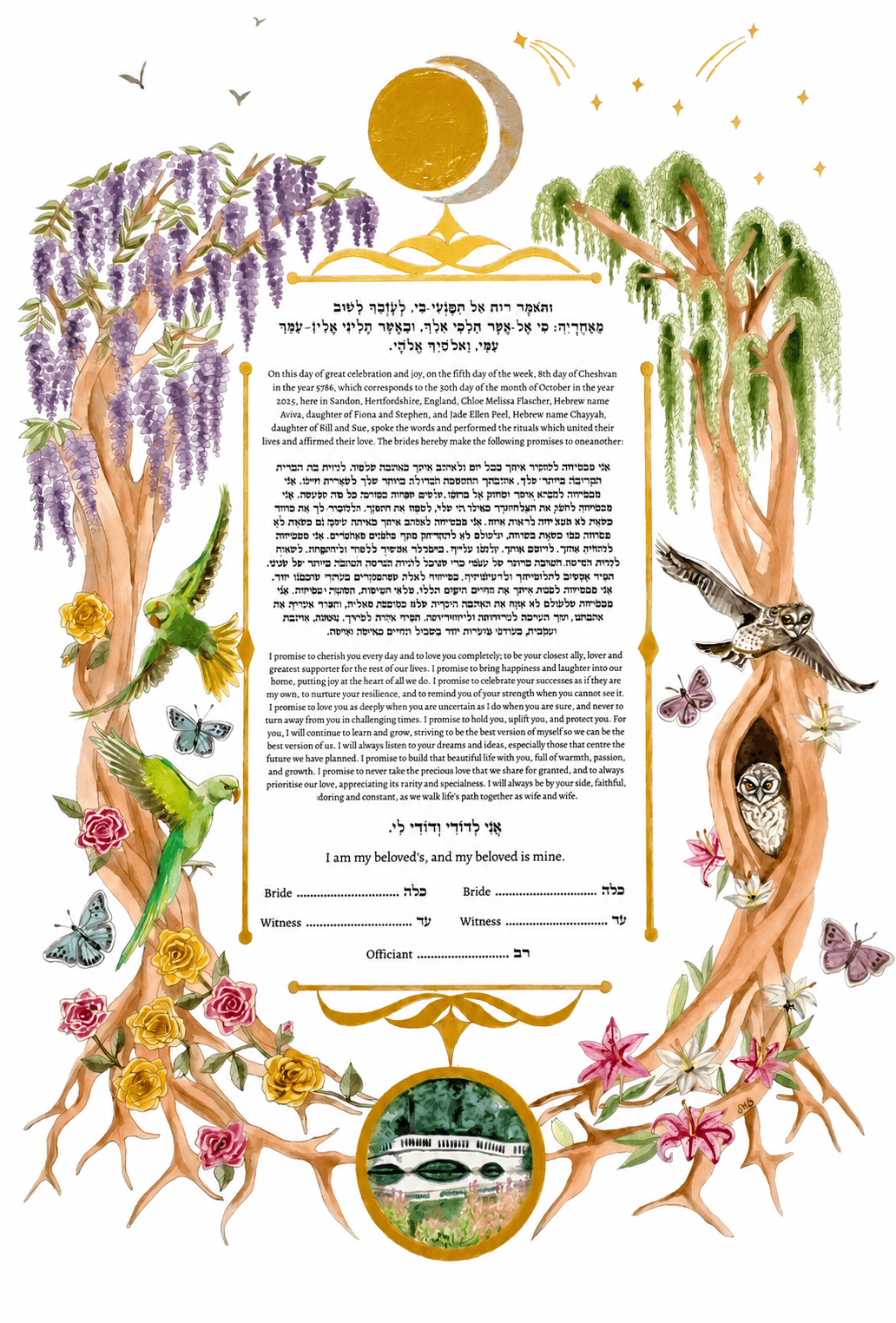
Chloe and Jade’s ketubah has a completely different rhythm. Two trees create the main structure around the text, with wisteria, willow branches, birds, owls, butterflies and flowers bringing detail and movement. The imagery on the two sides represents night and day, while the small scene at the bottom shows the bridge at Kenwood House in London where the couple got engaged. Above the text, celestial elements and gold-toned accents bring the whole composition together.
This is why the conversation at the beginning matters. A custom commission does not have to follow a house template. The composition can grow from the couple’s chosen imagery while still giving the wording the space, balance and dignity it needs.
The final reveal is not the first update
A custom ketubah is collaborative, but it should still contain the pleasure of seeing the whole piece come together. I share photographs as I work, then send a clear image of the completed painting at the end. The couple knows how the work is progressing while the finished composition still feels like a reveal.
Once complete, the ketubah is wrapped in beautiful floral, acid-free tissue paper. The tissue helps protect the painted surface in transit while making the moment of opening it feel special. The original is then carefully packaged and delivered in time for the wedding.
After it arrives, it should remain flat, dry and protected from direct sunlight, food and drinks. Permanent conservation framing is best arranged after the ceremony so that the ketubah can be signed without a mount or glazing getting in the way.
Allow at least eight weeks for a custom ketubah
Eight weeks is the minimum I recommend for the commission process. That time allows us to develop the idea, refine and approve the pencil sketch, receive the confirmed final text, print it and paint the original without forcing important decisions. If finalising the text takes longer or the design is especially detailed, beginning earlier gives everyone more breathing room.
A fully custom ketubah currently costs £850. Half, £425, is paid when the approved text is ready to be printed. The remaining £425 is paid when the painting is finished. I explain the process and payment points clearly during the free consultation, before the couple commits to the commission.
The result is a ketubah made in conversation with the people whose marriage it records: their approved words at its centre and an original painting created around them.