Jewish wedding planning
What happens at a ketubah signing?
A practical, inclusive guide to the people, timing and details of the ketubah signing, from choosing witnesses to caring for the signed artwork.
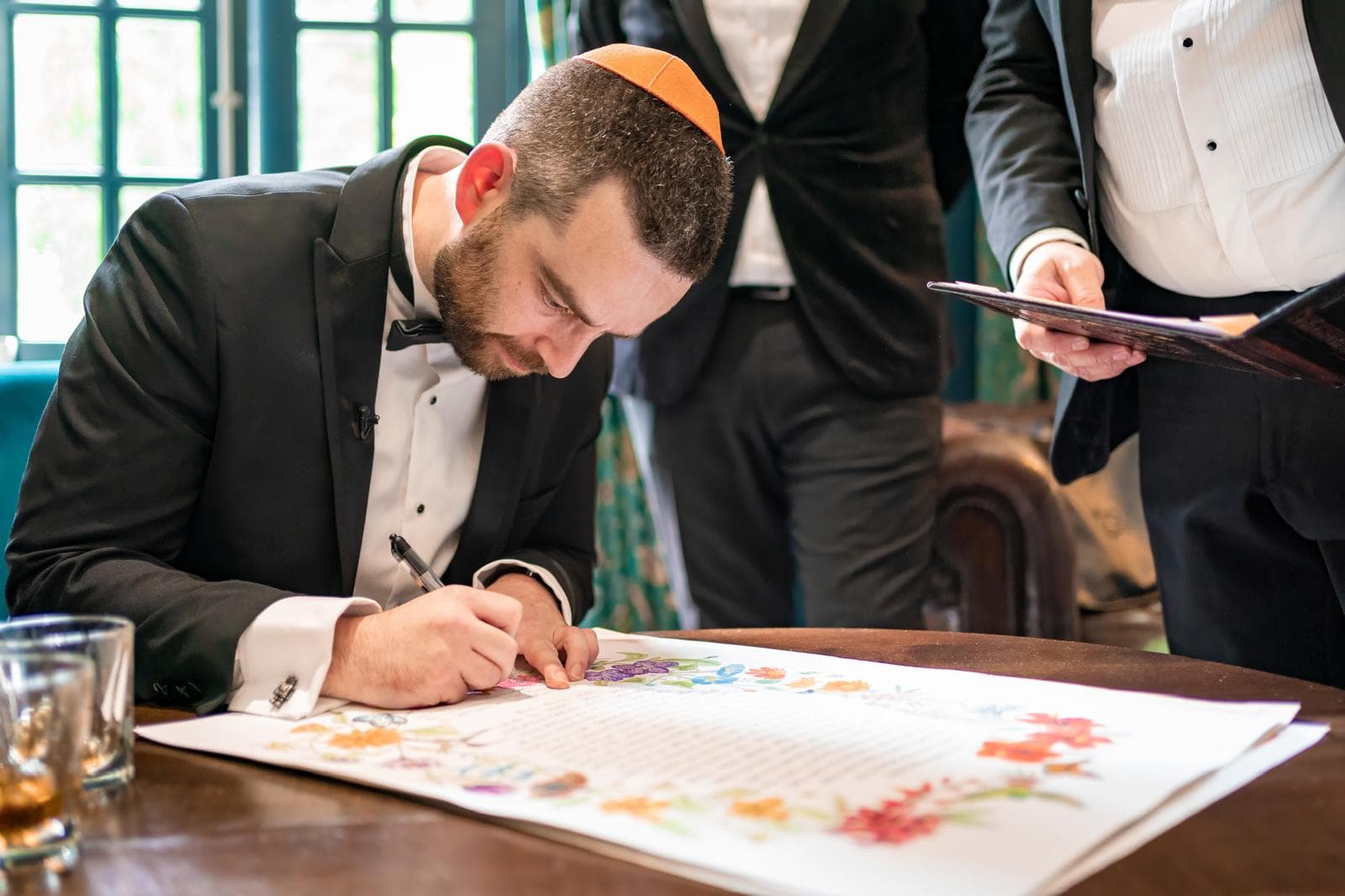
The ketubah signing can be one of the most intimate moments of a Jewish wedding. It may happen quietly with two witnesses before the ceremony, or it may bring together the couple, their families, friends and the person leading the wedding. Either way, it is the point at which a beautiful piece of paper becomes part of the ceremony and the couple’s story.
There is no single signing format shared by every Jewish wedding. Who signs, what they are confirming and whether the ketubah is later read beneath the chuppah all depend on the text, the community, the couple and their traditions. This guide explains the common possibilities and the practical details worth planning in advance.
There is no single ketubah signing ceremony
A ketubah may be a traditional Jewish legal document, an egalitarian covenant, a personal statement of shared values or a text created for an interfaith or culturally Jewish ceremony. The signing changes with it. In some weddings the witnesses are the only people who sign. In others the couple, witnesses and officiant all add their names.
That means a generic online checklist cannot tell you exactly who is eligible to sign your ketubah or how many signature lines it needs. Confirm those details with the rabbi, cantor, celebrant or other person guiding your ceremony before the final text is prepared. Your ketubah artist can then make sure the approved wording and signature area fit the design.
When and where is the ketubah signed?
The ketubah is usually signed before the main wedding ceremony. Some couples gather in a quiet room shortly before the chuppah. Others build the signing into a tish, bedeken or a separate gathering with close family and friends. Contemporary ceremonies sometimes place the signing within the public ceremony itself.
The best timing leaves everyone enough space to read what they are signing, confirm that the correct ketubah is on the table and add signatures without feeling rushed. Allow more than a spare five minutes between photographs and the processional. A calm signing is safer for the artwork and more meaningful for the people taking part.
Who signs a ketubah?
The short answer is that it depends on the ceremony. These are common approaches rather than universal rules:
Traditional and Orthodox ceremonies
Two witnesses normally sign according to detailed halachic requirements. The couple may not sign the ketubah itself. Witness eligibility is a religious decision, so agree the names with the rabbi or other authority overseeing the wedding rather than choosing from a general checklist.
Conservative and Masorti ceremonies
The signing may follow a traditional witness structure, sometimes with additional signatures or wording approved by the community. Requirements differ between congregations and texts, so the person guiding the ceremony should confirm the exact format.
Reform, Liberal, Reconstructionist and egalitarian ceremonies
The couple often signs alongside witnesses, and the officiant may sign too. The witnesses may be chosen for their relationship to the couple rather than under traditional halachic criteria, but local practice still varies.
Interfaith, secular and culturally Jewish ceremonies
The couple may invite loved ones to witness a personal covenant, or shape the signing around the text and ceremony they have created. The celebrant can help decide whose signatures will best reflect the meaning of the moment.
Whatever form your wedding takes, settle the number and roles of signatories before the ketubah is printed. Adding an unexpected signature line on the day is rarely a good solution.
What happens during the signing?
The precise words and rituals vary, but the practical sequence is usually simple. Someone brings the completed ketubah to the signing space, the relevant people gather, and the text and names are checked before anyone puts pen to paper.
- The ketubah is reviewed. The person leading the signing may confirm the names, date, location and approved wording one final time.
- The purpose is explained. The text may be read or summarised so that the signatories understand what the ketubah represents in this ceremony.
- The required people sign. Witnesses, the couple and the officiant add their signatures according to the agreed format.
- The ketubah is moved safely. A named person takes responsibility for carrying it to the ceremony, displaying it if required and protecting it afterwards.
Is the ketubah read beneath the chuppah?
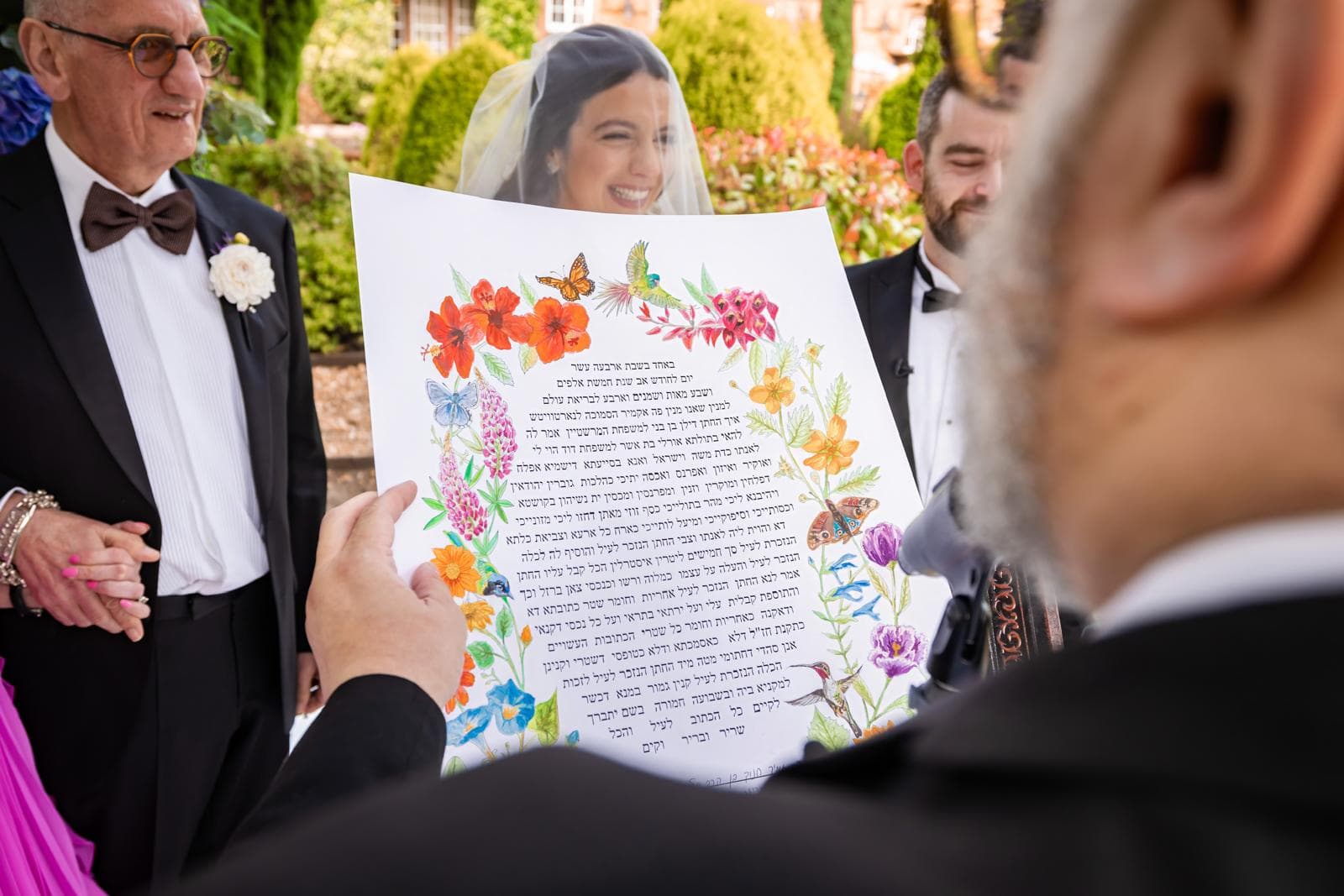
In many traditional ceremonies, the ketubah is read aloud after the first part of the wedding ceremony and before the next blessings. This creates a deliberate pause between the stages of the ceremony. The reading may be in the original language, followed by a translation or explanation.
Other couples read an excerpt, invite someone to explain the artwork and wording, display the signed ketubah without reading it, or keep the signing completely private. Decide what suits your ceremony and make sure the person carrying the ketubah knows when and where it will be needed.
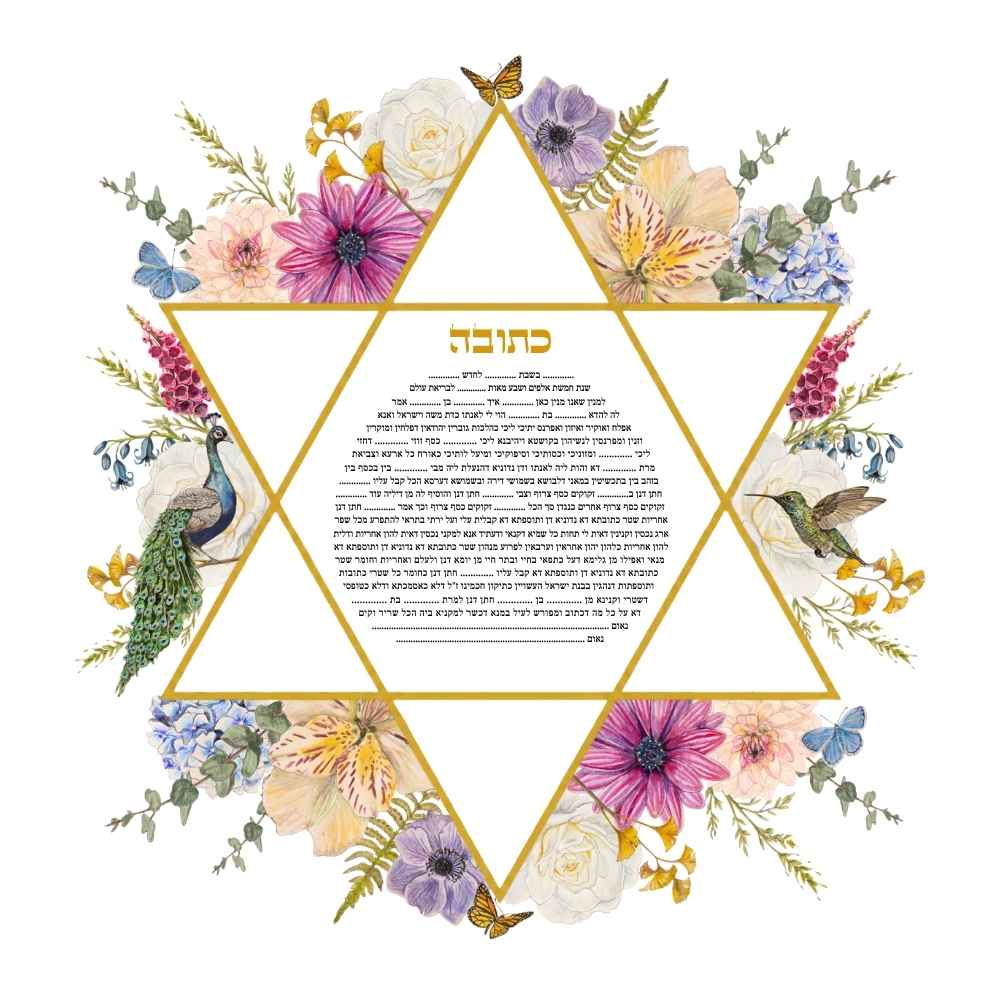
The ketubah’s place in your life does not end with the ceremony. Sophie’s hand-painted designs are personalised with your approved text, then made to come home with you as a lasting piece of wedding art.
Explore hand-painted ketubahs for your ceremony and home

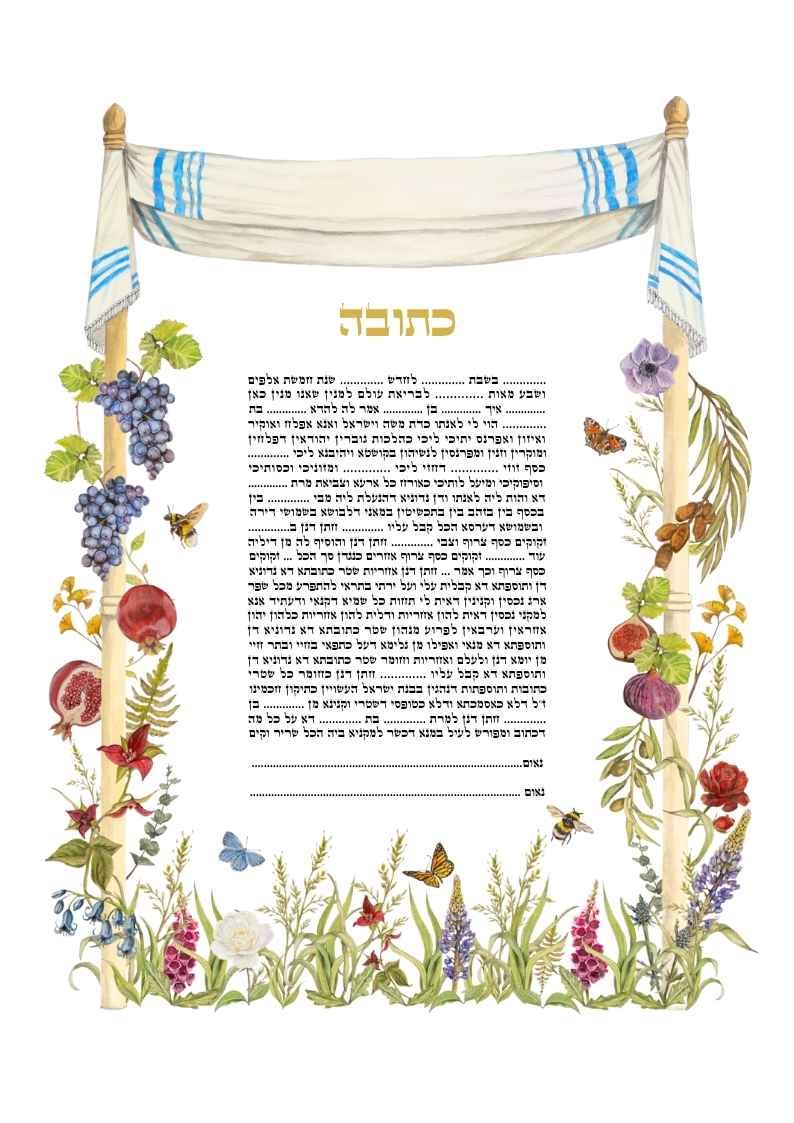
Prepare the paper, pens and signing table
A hand-painted ketubah needs a little more care than an ordinary form. Set up a clean, flat and dry surface with enough room for the artwork to lie fully supported. Keep flowers, candles, food and drinks at a safe distance, and ask everyone to sign with clean, dry hands.
Ask the artist which pen is suitable for the paper and test the same type on a separate sample if one is available. Avoid bringing a random marker to the ceremony. Ink that feathers, smudges or takes a long time to dry can spoil both the signature and the surrounding artwork.
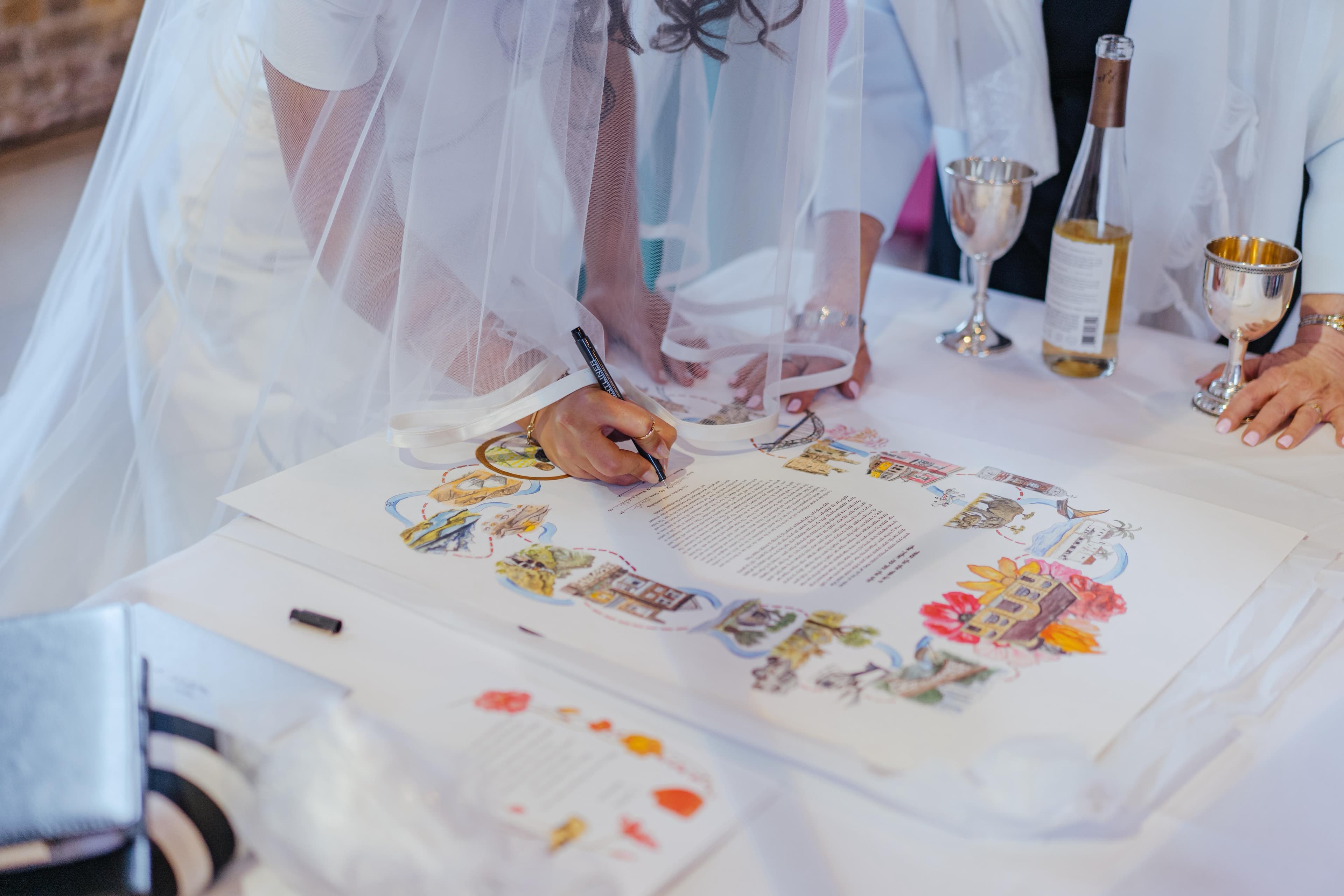
Choose one person to look after the ketubah
The couple should not have to remember where the ketubah went immediately after signing. Give one trusted person the whole job: collecting it from its safe storage place, bringing it to the signing table, carrying it to the ceremony if needed and returning it to protection afterwards.
Tell that person how the ketubah should be handled and where it will go after the ceremony. The safest plan is usually to return it to its tissue and rigid packaging, then place it somewhere dry and out of reach of drinks, bouquets and passing guests.
Ask your photographer for more than one ketubah photograph
Photographers naturally capture the people signing, but couples are often surprised to discover that they do not have a clear photograph of the finished ketubah itself. Add it to the shot list before the wedding.
Ask for a straight, evenly lit image of the unsigned artwork, a close photograph after all signatures are dry, and a few wider photographs that show the people and atmosphere around the signing. These images record both the artwork and the human moment it became part of.
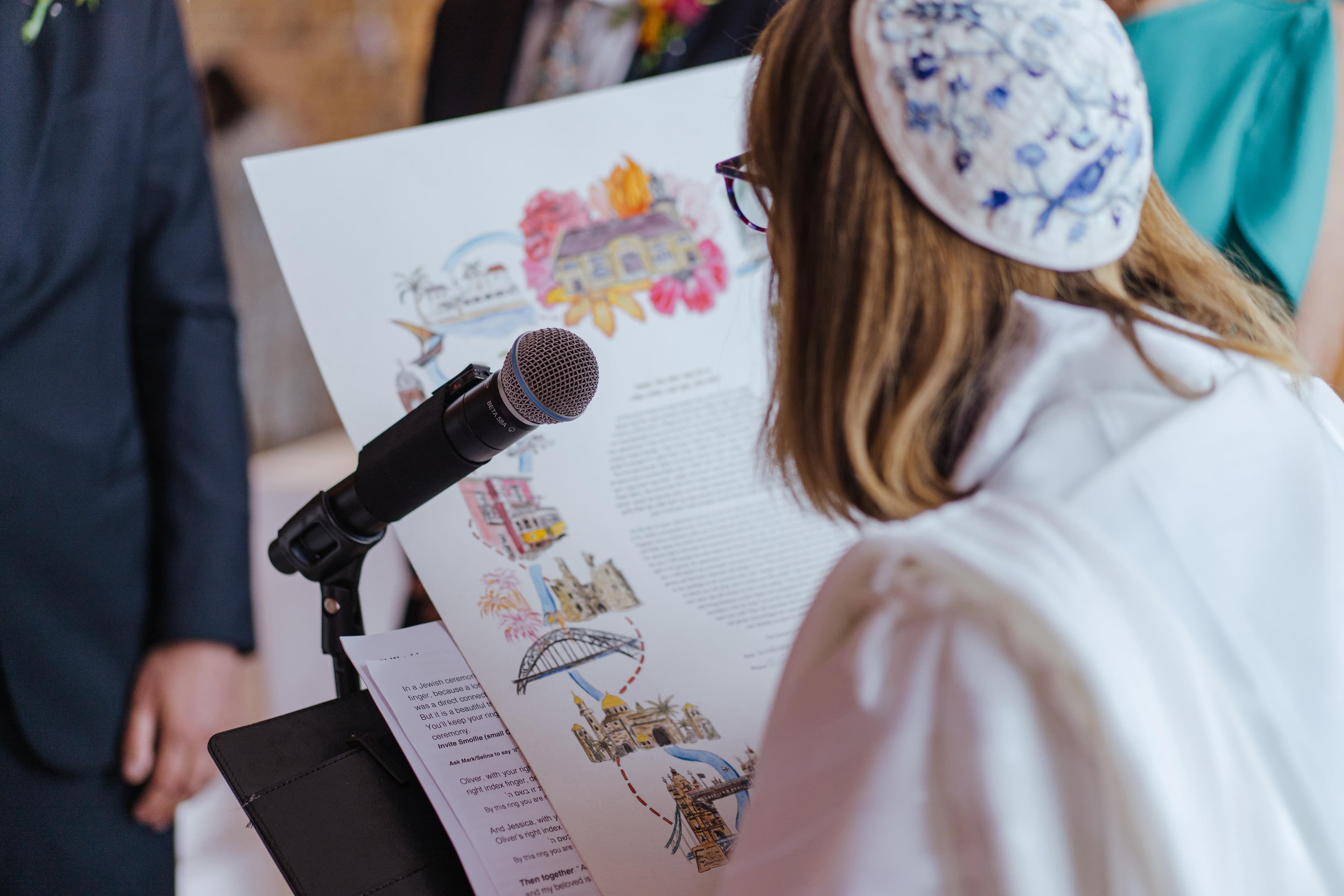
What should happen to the ketubah after the wedding?
Keep the ketubah flat, dry and protected until it can be framed. Do not roll a painted original unless the artist has specifically said it is safe, and do not leave it in a hot car or damp venue overnight. If it is displayed at the reception, use a stable position away from food, drinks and direct handling.
For long-term display, choose conservation-quality framing with acid-free materials and glazing that helps protect the artwork from ultraviolet light. Leave enough time after the wedding to enjoy choosing a frame that belongs in your home rather than making a rushed decision during wedding week.